Architecture that starts with the people it's for.
CLAD is an architecture practice based in Naarm (Melbourne) and lutruwita (Tasmania), founded in 2021 by Carey Landwehr.
Small, careful, and embedded in its place.
CLAD works at the meeting point of residential, community, and public-interest architecture. The bias is regenerative; the method is participatory; the politics are quietly housed in the work.
We're Living Future Institute accredited and design to Petal Certification threshold by default. We're members of Architects Declare and the Sustainable Builders Alliance. Carey's advocacy roles include Vice President of the Union of Architectural Workers (2024–2026). None of this sits behind the work. It shapes the work.
Our research and teaching feeds back into practice, especially on housing, community models, and the policy frameworks that decide who gets to live where. We work across Victoria and Tasmania and welcome conversations from outside our usual catchment.
Acknowledgement of CountryCarey was born in Yamatji Country and lives and works on the land of the Wurundjeri Woi Wurrung People. He acknowledges the Traditional Custodians of this land whose sovereignty was never ceded, and pays his respect to their enduring connection to Country.

Carey Landwehr
Carey Landwehr (he/him) is a registered architect and principal of CLAD, which specialises in community-driven, regenerative projects across Naarm and Lutruwita. Previously a project architect at Jackson Clements Burrows Architects, he delivered significant social housing projects across Victoria.
Drawing on his 2024–2026 service as Vice President of the Union of Architectural Workers and his Living Future Institute accreditation, Carey advocates for multidisciplinary approaches that embrace equitable access to architecture. Alongside practice, he teaches at several tertiary institutions. His current research focuses on communal autonomy at the intersection of architecture and public policy, with a focus on housing models.
Three commitments. Each one shows up in the work.
Three commitments, each visible in how we run a project: who's in the room, what the brief is measured against, what we leave behind when we hand over the keys.
We design projects with the people who'll use them.
On community work that means co-design sessions with residents and stakeholders before the first plans are drawn. On residential work it's quieter: usually three or four conversations before any lines go down. Co-design is standard practice, not a marketing word.
- Six community housing projects delivered with participatory briefing
- Industry Mentor for ABP and AIA Industry Mentoring Programs
- Co-design workshops scoped into every Stage 01
CLAD designs to the Living Future Petal Certification threshold by default.
The accreditation shapes specific design choices on every project: orientation, fabric, water cycles, materials, and on-going post-occupancy review. Whether the work hits full Petal Certification depends on budget and brief, but we design to the threshold every time.
- LFIA accredited, 2022
- Architects Declare member
- EDIE™ Dementia Design accredited
Buildings outlive briefs.
We design residential work with enough structural slack to allow later reconfiguration: non-load-bearing internal walls where the plan permits, single-level addition pathways, serviceable roof and wet-area zoning. Community and educational work is designed for seasonal reconfiguration as a baseline.
- Long-term flexibility specified at Stage 02
- Twelve-month post-occupancy review included
- Designs published openly through CLAD research
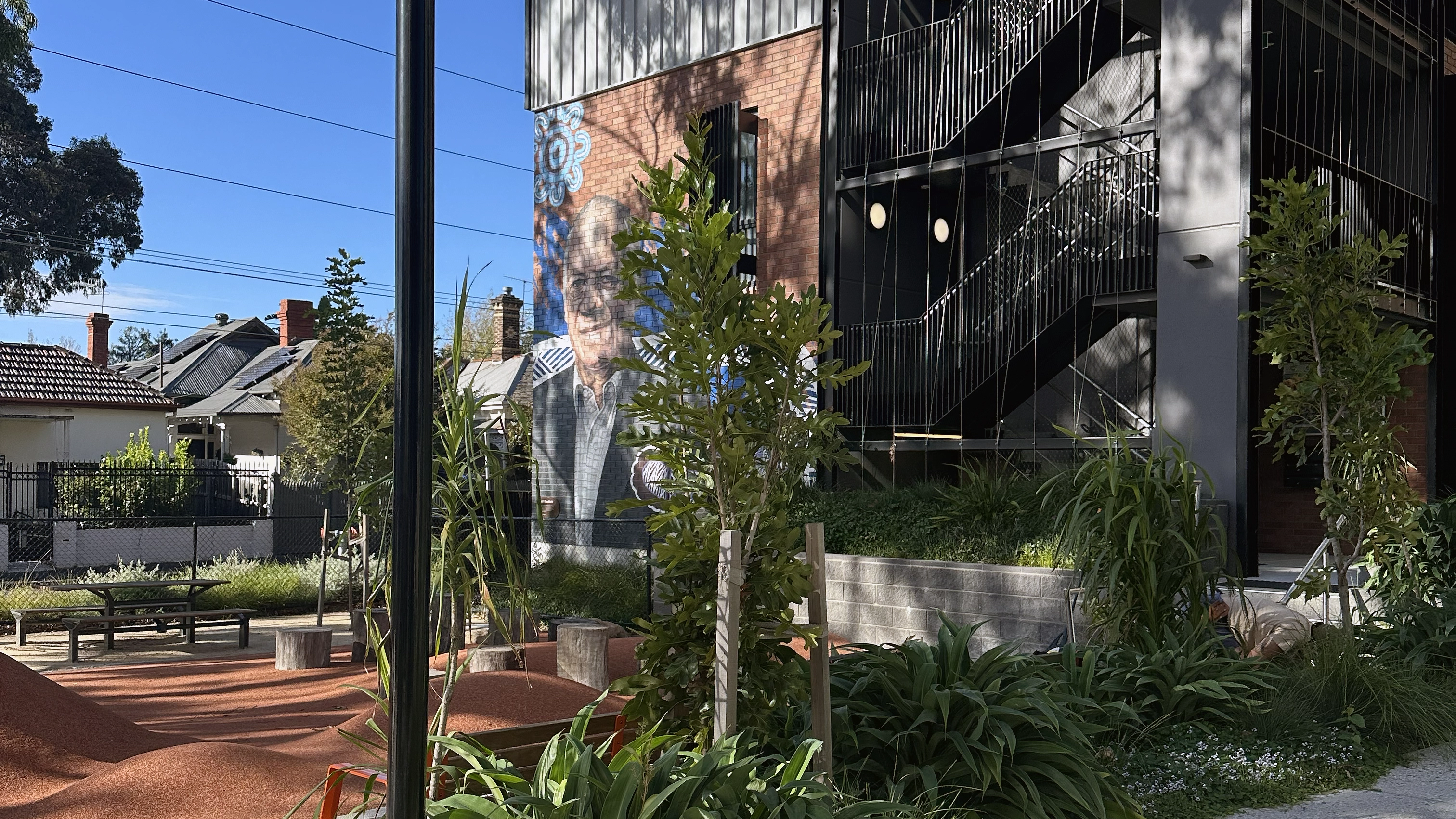
The practice doesn't end at the studio door.
Carey teaches at four tertiary institutions, has served on the executive of the Union of Architectural Workers, and completed a Graduate Certificate in Public Policy at the ANU in 2025. Academic research feeds the practice, especially on housing and community models.
This isn't a sideline. Teaching, organising and policy work shape what gets briefed, what gets built, and who gets to commission an architect in the first place.
- Since 2024 Teaching AssociateMonash University
- Since 2024 Sessional Lecturer (Construction)Melbourne Polytechnic
- Since 2024 Sessional Academic, Studio LeaderSwinburne University of Technology
- Since 2021 Sessional AcademicMelbourne School of Design, University of Melbourne
- 2024 to 2026 Vice PresidentUnion of Architectural Workers
- Since 2023 MemberArchitects Declare
- Since 2024 MemberSustainable Builders Alliance
- Since 2022 MemberParlour Collective
- Since 2024 MemberRenters and Housing Union Australia
- 2022 to 2024 Committee MemberProfessional Architects Australia
Awards, accreditations, and study.
Each line earns its place by changing what we can do for a client.
| Year | Name | Awarded / Institution |
|---|---|---|
| 2025 | Education Graduate Certificate (Public Policy) | The Australian National University |
| 2023 | Accreditation Dementia Design (EDIE™) | Dementia Australia |
| 2022 | Accreditation Living Future Institute Accredited (LFIA) | Living Future Institute of Australia |
| 2018 | Award Bates Smart Medal, Commendation | An Exploration of Architectural Temporality |
| 2018 | Award DesignInc Positive Legacy Design Award | The Koolin Balit Centre |
| 2018 | Education Master of Architecture | The University of Melbourne |
| 2016/17 | Award Melbourne Global Scholars Award | India / United Kingdom |
| 2012 | Education Bachelor of Arts (Design and Applied Arts) | Curtin University |
Talk to us about your project
Get in touch